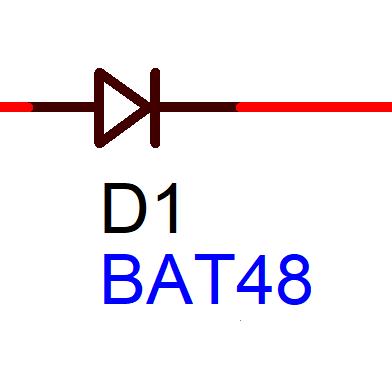
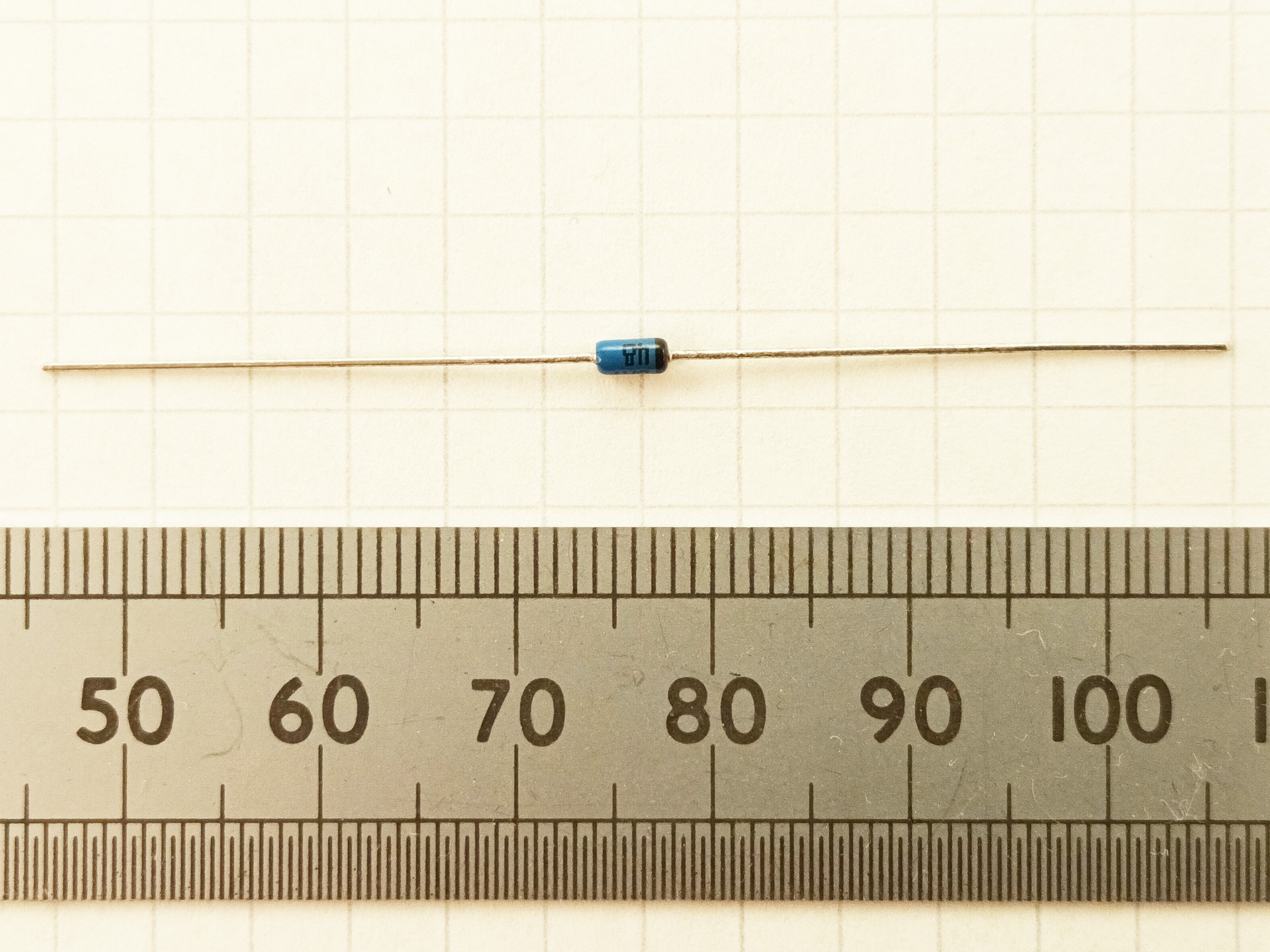
This is a silicon small signal Schottky diode used in the kit as an AM demodulator diode. Unusually, in this circuit, it can be connected either way round. The end with the black band signifies the cathode, which is the end with the triangle point against the vertical line in the schematic symbol. Conventional current flows in the direction of the triangle and is blocked in the other direction. The triangle flat end may be denoted by an "A" for anode in pin-out diagrams. The vertical line end may be denoted by a "K" for cathode in pin-out diagrams. Electronics engineers sometimes refer to this as "the pointy end," to avoid confusion. Small signal silicon Schottky diodes are specially made to have a low forward voltage, unlike standard silicon diodes. This is crucial in a crystal set.
Q: Why choose a BAT48?
A1: It has a low Vf (forward voltage) which is the threshold that you have to meet before current starts to flow through the diode, and you hear a signal.
A2: Unlike germanium point contact, they are extremely consistent in their electrical properties. Absence of variability in a kit is more essential than occasionally getting +1dB extra signal from a lucky diode.
A3: It works well and reliably with this particular combination of 470pF capacitor, LT44 transformer, and the standard piezo earphones.
A4: They are still being manufactured by the identifiable manufacturer, ST Microelectronics, and are likely to remain so for some years.
Q: I've heard that the BAT46 is slightly better for crystal sets. Is it?
A: Very marginally, maybe. BAT46 has a slightly lower capacitance and a slightly lower reverse leakage, which are not critical factors here. I've not tried them yet.
Q: What's the difference between an AM demodulator diode, and an AM detector diode?
A: Nothing. Detector is somewhat old phraseology.
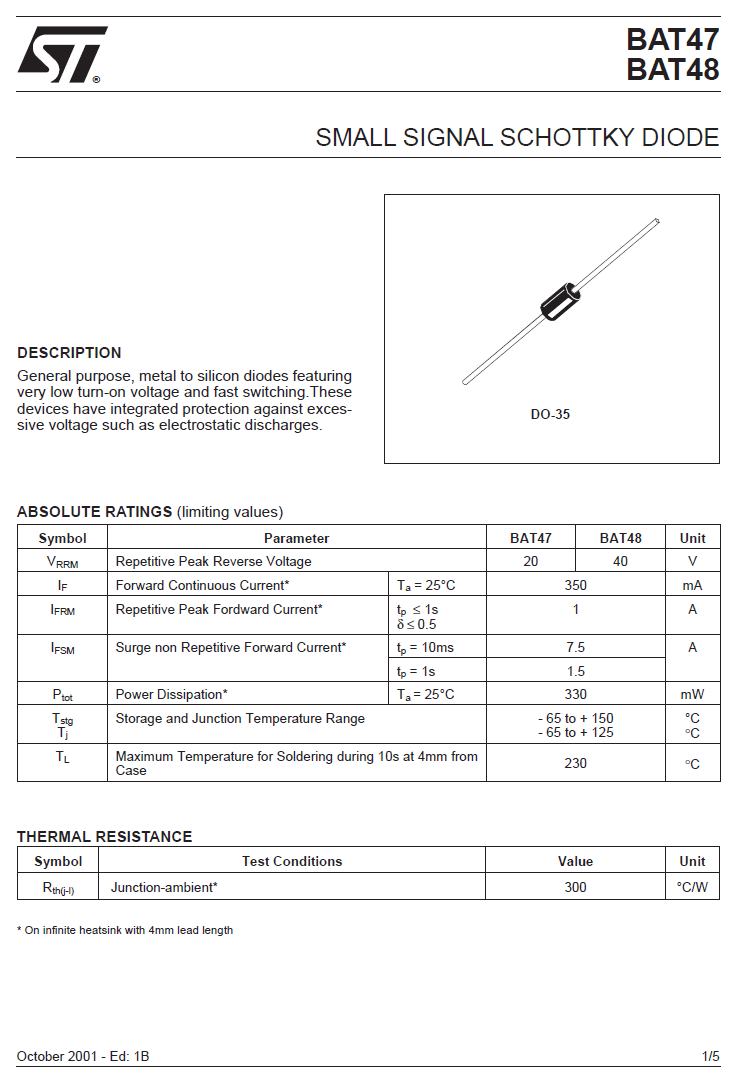
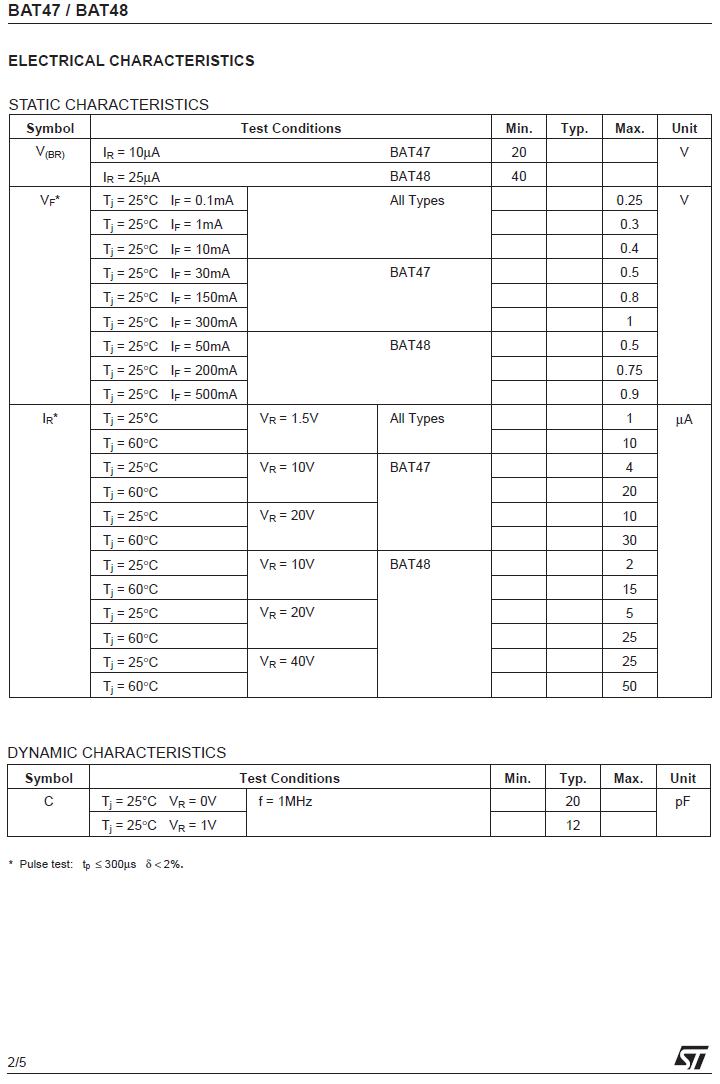
Here are pictures of the five page ST data sheet:
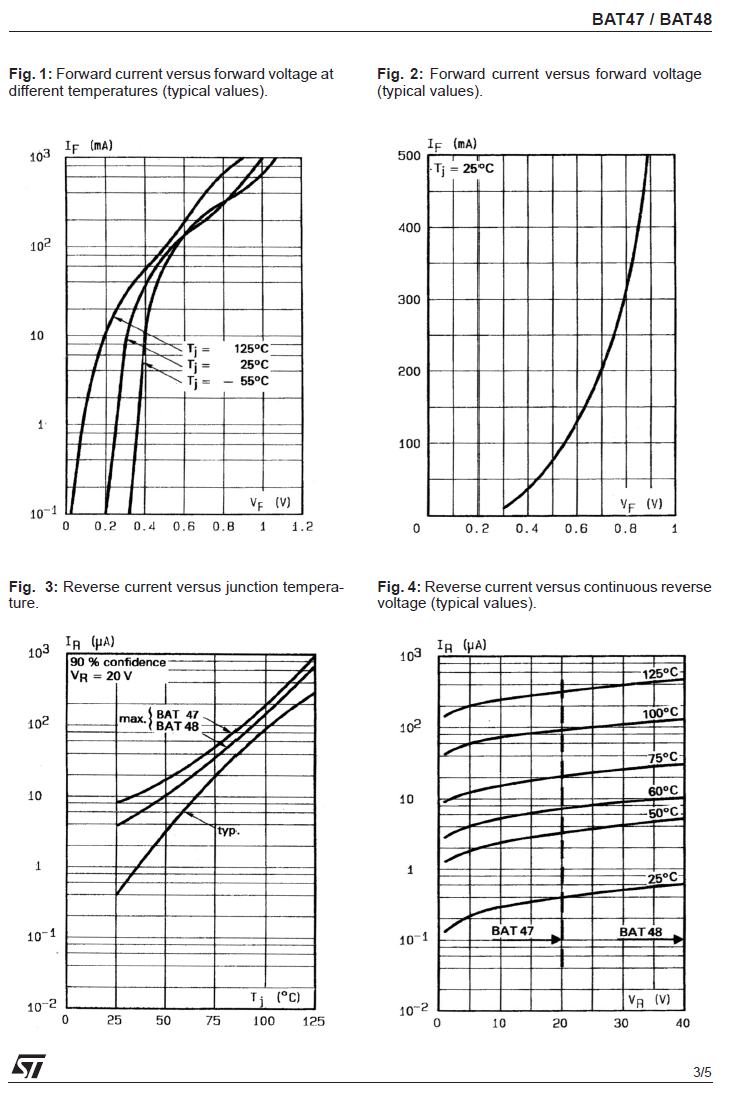
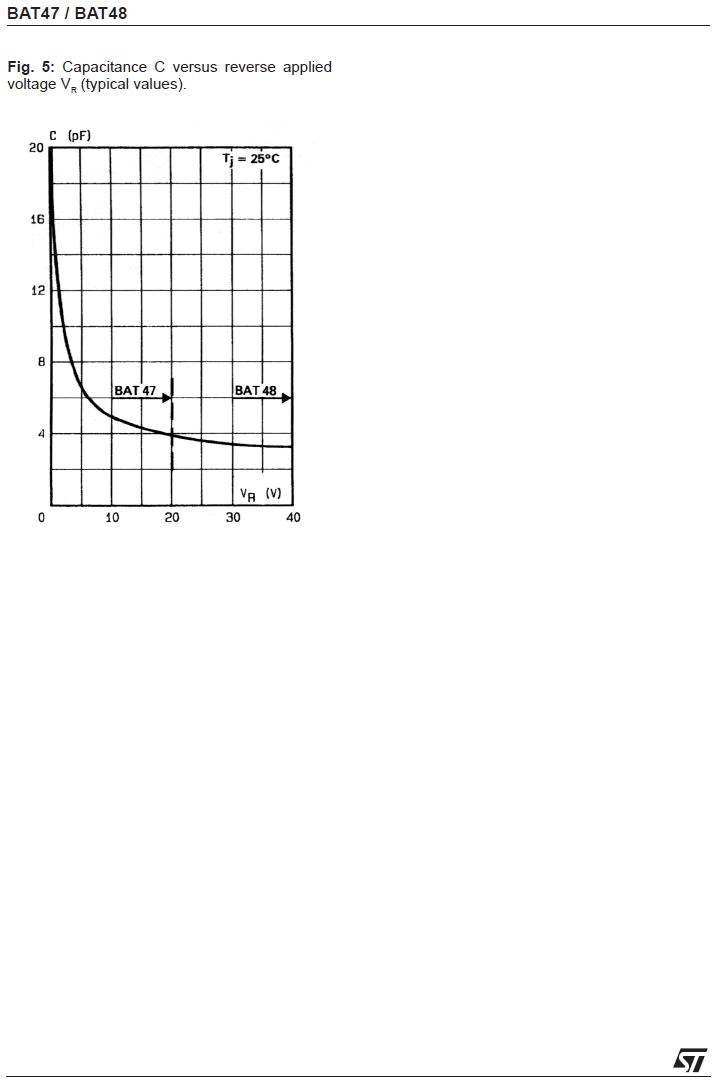
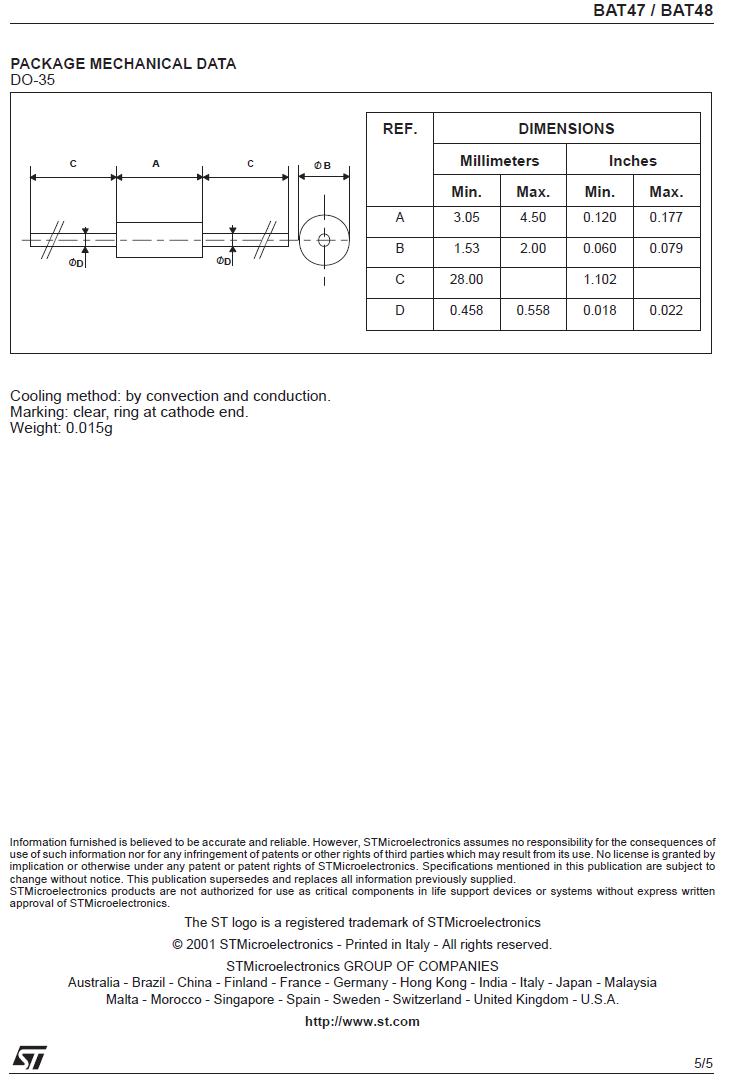
In the early days of radio, the diode in a crystal set would have been a piece of galena crystal where the rectifying contact was made with a light touch from a small springy wire. The other contact would be made with a firm clamp. Those made good low power crystal set diodes, but were subject to vibration effects and could be tricky to make work well. The small springy wire was referred to as a "cat's whisker." If you look at a clear glass germanium point contact diode, such as a 1960's OA81 under a microscope, you can see a similar, more reliable arrangement touching a germanium crystal. You might see references to the diode being a "coherer," and then we're really getting into early wireless history.
If you've got your kit working using the diode supplied, you could try some alternative ways of making a diode using something like the cat's whisker made from copper wire and various materials like a piece of barbecue briquette, coke (the carbon based solid fuel, not the brown liquid) aluminium foil, or the edge of a razor blade. Good luck!
More Q & A on the OA81 and other germanium point contact diodes
Q: What's the difference between an OA81 and an OA91?
A: "The OA91 has the same electrical properties as the OA81, but is a miniature version." Source? The 1967 Mullard Valve and Semiconductor Data Book.
Q: Where can I get an original OA81?
A: Out of an old 1960's British transistor radio. However, there's no guarantee that it will be working if the set isn't operational. The springy wire tends to lose its springiness over the decades, and they are quite often found open-circuit. If you can hear the audio circuits power up on an old transistor radio which you're trying to fix, but there's no radio coming through, suspect the OA81.
