100mm Long 9.5mm Diameter Ferrite Rod
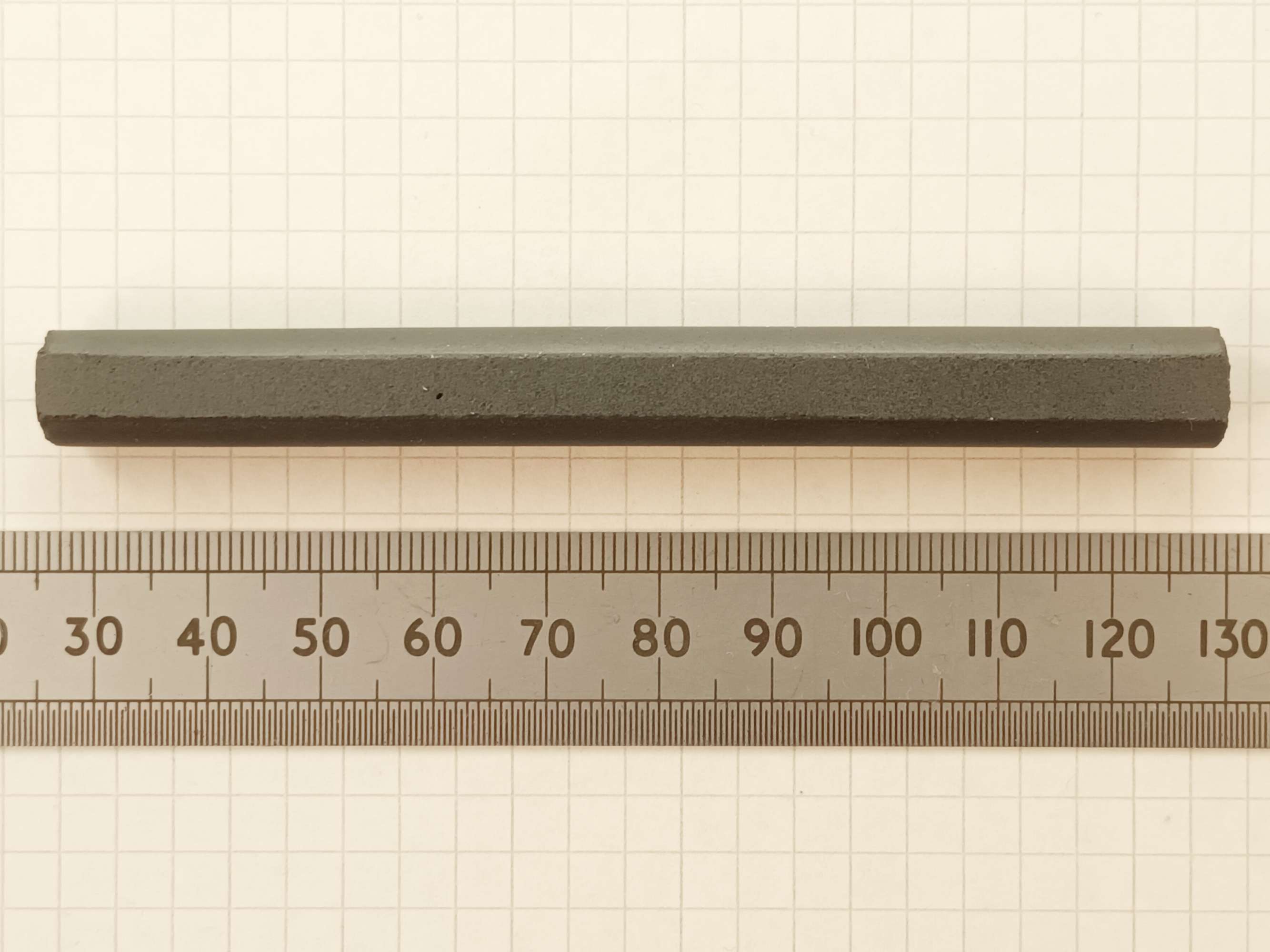
This is a 10cm long, 9.5mm diameter ferrite rod of standard MW LW
permeability grade. Originally, these were all specified as
being 3/8 of an inch, hence the odd 9.5mm metric
measurement. The ferrite material is magnetic, but unlike
solid iron, it has a low electrical conductivity. The
permeability factor of the material magnifies the magnetic field
within the windings. This means that you can use fewer turns
to get a certain inductance, and fewer turns means less signal
loss because a smaller amount of copper wire is used. It
also allows you to make the coil smaller, so that the finished set
is portable. There is some small loss of signal within the
ferrite material, but the reduction in wire resistance more than
compensates for this.
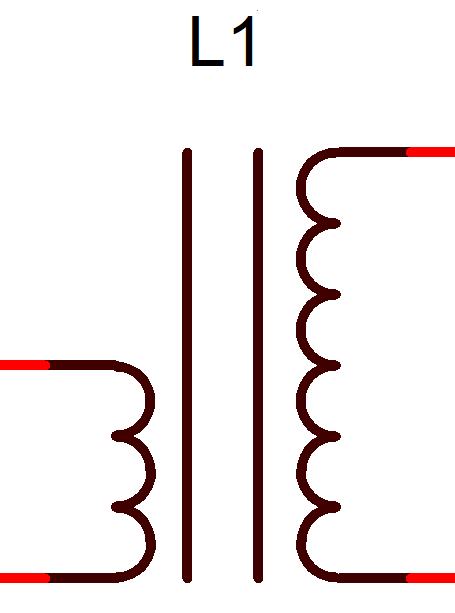
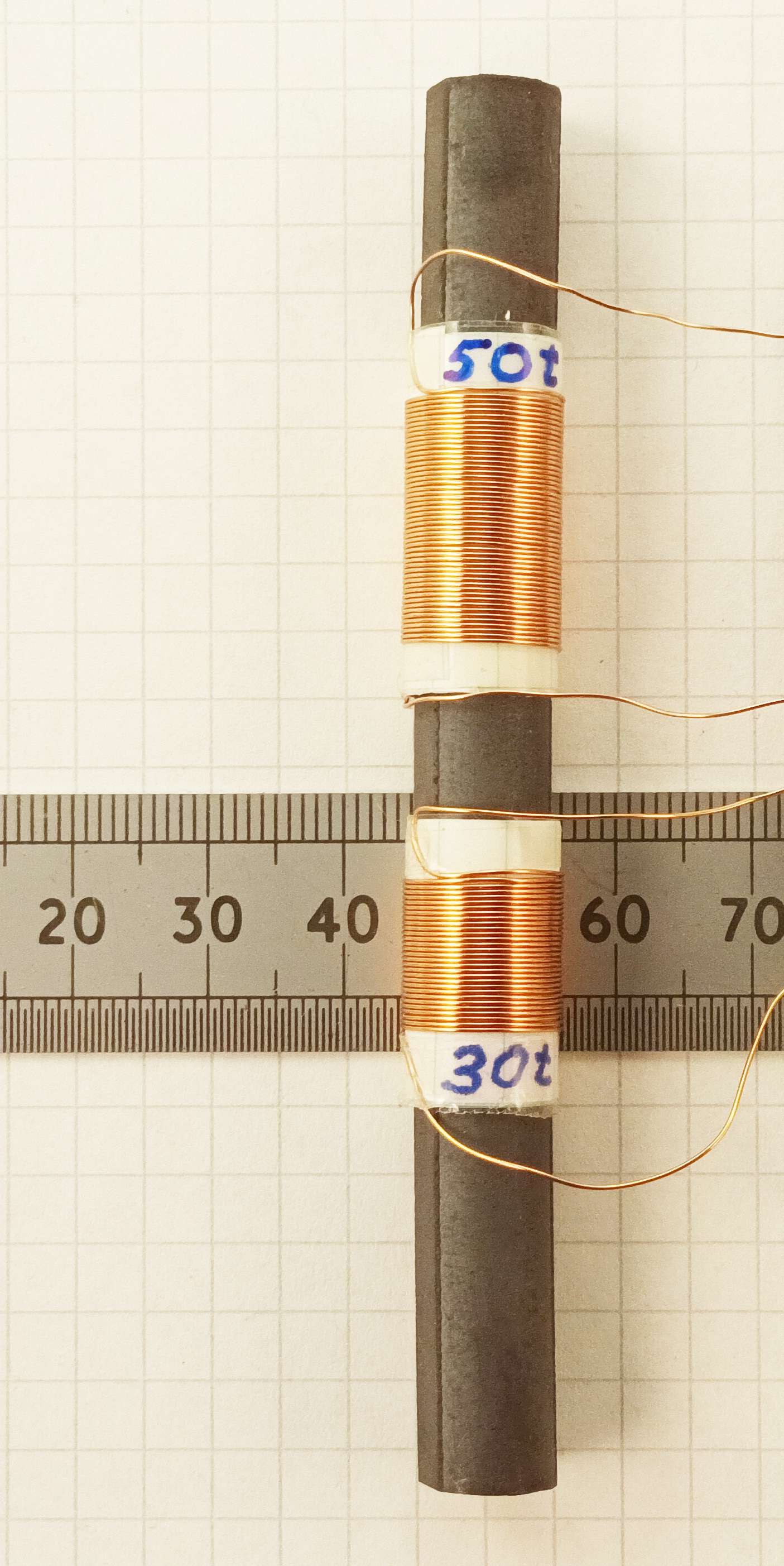
The 30 turn coil is connected to aerial and earth. The 50
turn coil is connected into the parallel variable capacitor and
the rest of the circuit. The combination of the inductance
in the 50 turn coil and the variable capacitor is called a
resonant tank. You can imagine it to be somewhat like a
swinging pendulum. Separating the aerial and earth from the
main tank allows you to couple it to the tank less by moving it
away on the rod. If you have a good aerial, this can help
you to separate strong stations on adjacent frequencies. If
your aerial is indoors, or not well separated from various earthed
structures, the capacitance between your aerial and earth could
have a damping effect on the resonant tank if it were to be
connected directly to it. The separate aerial coupling coil
used here helps to avoid that. It is essential in many
cases.
The number of turns on each coil does not have to be exact.
More turns on the main tank will increase the inductance and tune
lower MW frequencies, as will moving it towards the center of the
rod, and vice-versa.
If you want to try to get that last bit of sensitivity, you could
try to improve the quality factor, or "Q" of the main tank
coil. One way to do that is to separate the turns by about
one wire width. This decreases the capacitance between each
turn and make a more pure inductance. I've not found an easy
way to do that, but you might. The coils here are shown with
the fixing tape only at the very ends, not over the coils
themselves. This is deliberate. You want to avoid
putting damp, gluey material over the coils as this can reduce the
Q.
Q: Can I used a piece of metal pipe instead of the paper
formers?
A: There's no such thing as a stupid question. No, the
metal will completely short out any signal by forming a very short
circuit single turn. Try it by sliding some copper tube over
the end of the rod on a working kit.
Q: Can I use some cut-up PTFE drinks bottle plastic instead
of the paper formers?
A: Yes. Anything that is completely dry and
non-conductive. Watch for sharp edges on cut plastic.
Plastic
hosepipe, thin overflow pipe, or
anything else like that which is not too larger diameter than
the ferrite rod will do.
Q: What is permeability?
A: Usually expressed as permeability relative to using no
core at all other than fresh air (actually called an air-cored
coil), it is the magnetic multiplying factor of the ferrite
material.
Q: what about LW (Longwave) reception in Europe, and SW
(Shortwave) reception elsewhere?
A: About 200 turns will tune you LW, though the wire
supplied is less effective on LW. You'd like to use fancy
"Litz" wire. If you're near Droitwich in the UK, 200 turns
will work for Radio 4 on 198 kHz. The ferrite core is less
effective at SW frequencies. I'll discuss this more
thoroughly elsewhere.
Navigate Up
My primary email which is checked daily including spam folders
is: 
Recent Edit History
22-NOV-2025: self caonicalised, direct refs