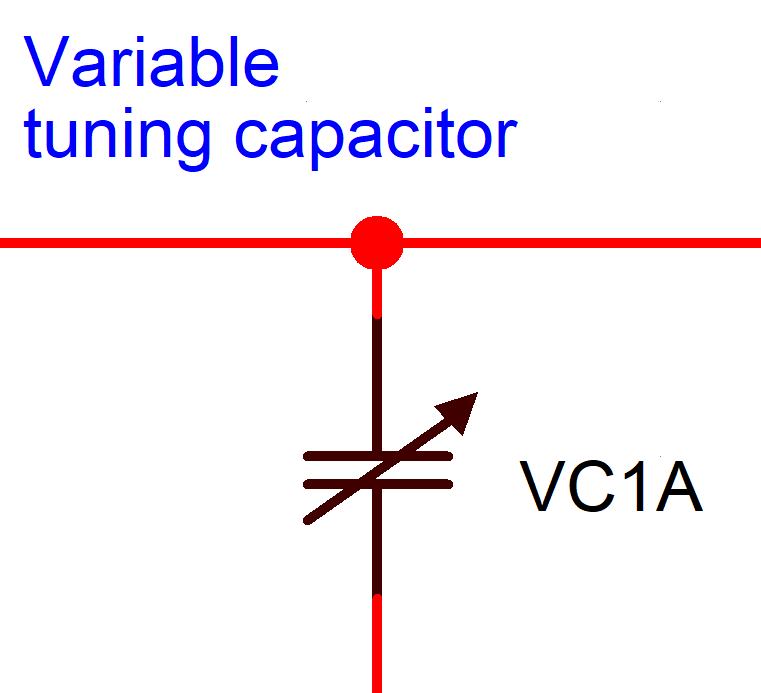
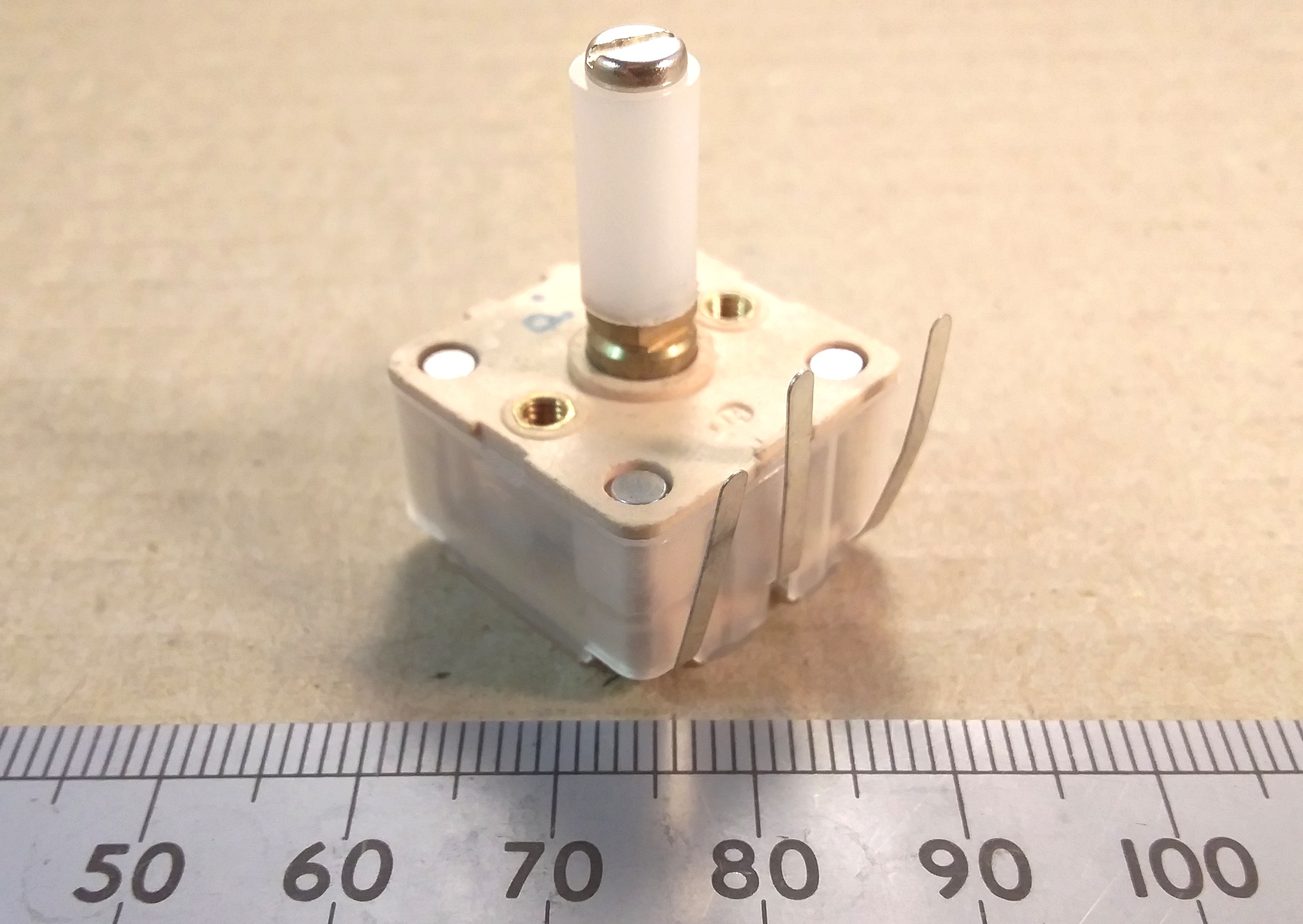
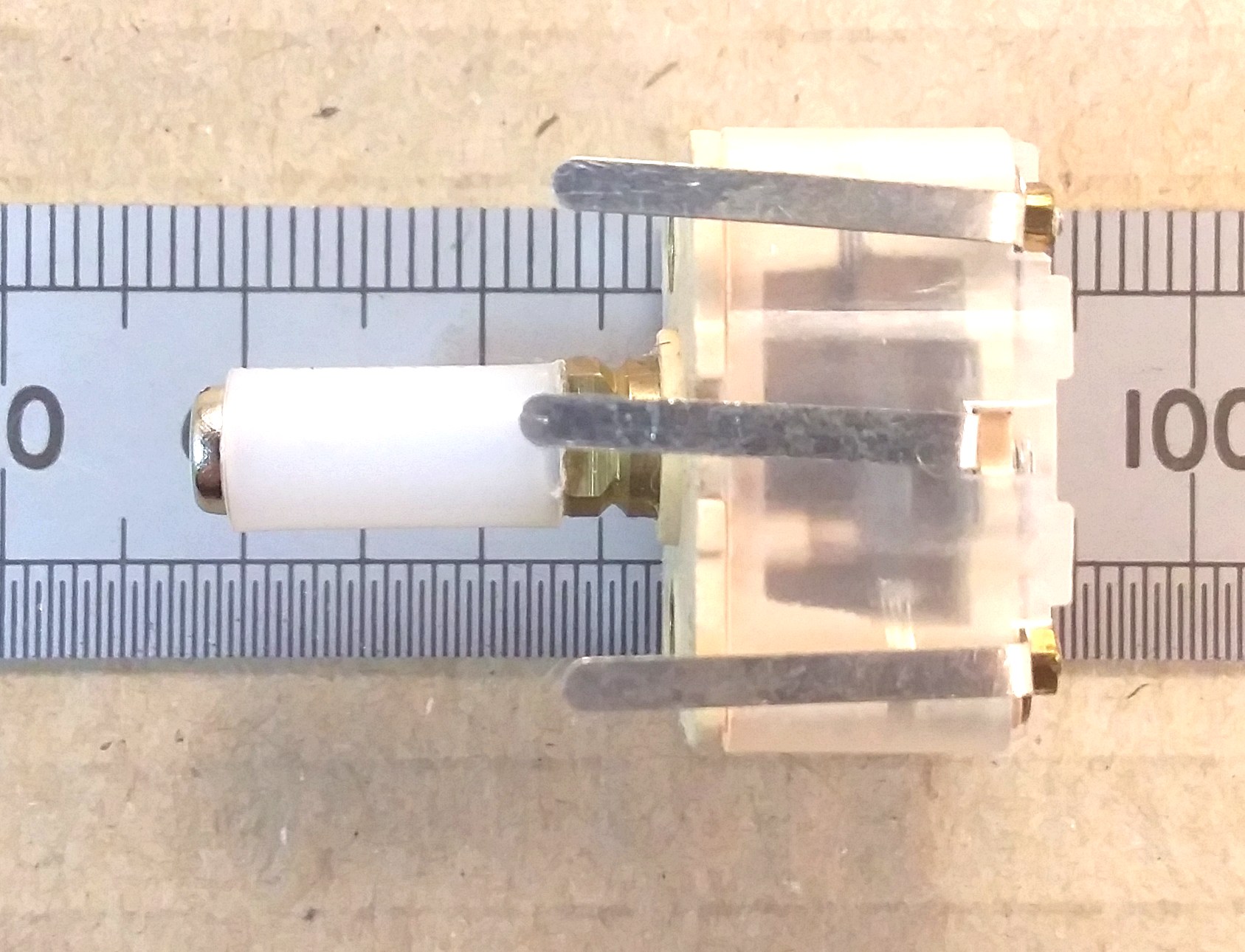

This is the electronic schematic symbol and pictures of VC1, the tuning capacitor used in the kit. It differs slightly from some of the older pictures on the main page. Those show the old type with the somewhat longer brass shaft that are no longer available. The plastic extension tube and securing screw provide a highly effective alternative which fits better with the tuning knob provided.
These parts are actually a dual variable capacitor, consisting of two independent sections with a common ground connection in the middle. It would normally be used in a superheterodyne AM transistor radio, where the lower capacitance section tunes the higher frequency mixer-oscillator, and the other tunes the antenna coil on the ferrite rod. The two sections are connected together in this kit to form a single variable capacitor with approximately 210pF maximum capacitance. There are two trimmer screws on the back. These should be adjusted so that the metal plates which they move are clear of the metal plates below them. These trimmers are used in superhet transistor radios to make the oscillator and ferrite antenna resonances cleverly track each other, despite being on different frequencies. In this circuit we don't want any fixed capacitance, so the trimmers are adjusted to their minimum to give the maximum tuning range.
In a resonant circuit such as the main coil and variable capacitor here, more capacitance (the vanes on the capacitor are more fully meshed) or more inductance (more turns on the coil or coil placed nearer the middle of the ferrite rod) gives you a lower radio reception frequency.
You might see these parts referred to as, "polyvaricons." Poly is short for the polyethylene plastic insulator used between the metal vanes. Varicon is an ancient term for variable condenser. Condenser = capacitor, back when dinosaurs still roamed the Earth.
Navigate Up
